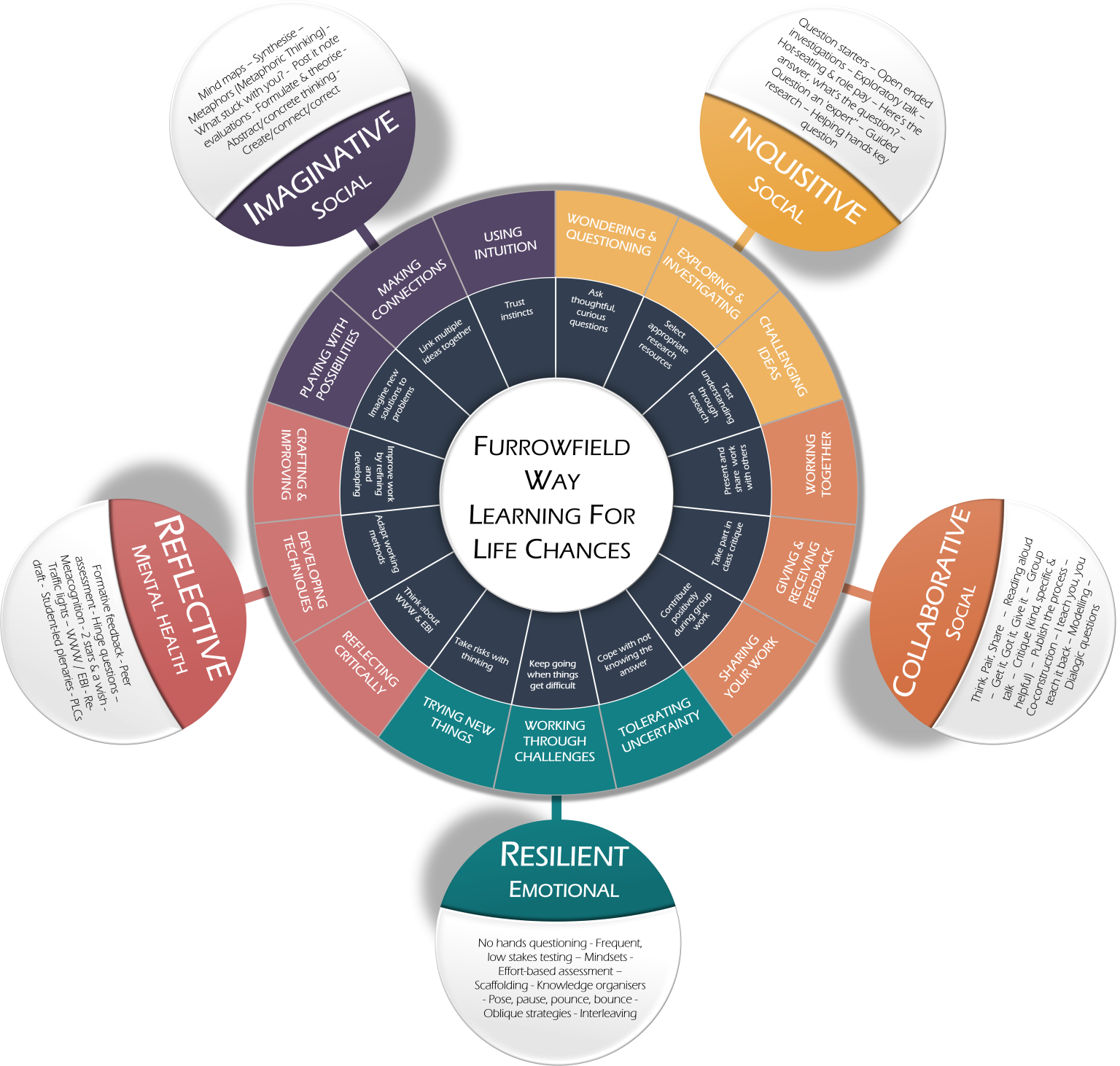
- Imaginative
- Inquisitive
- Resilient
- Reflective
- Collaborative
Curriculum Intent
- Improve life chances for every student
- Develop secure knowledge and understanding across a broad range of subjects
- Raise aspirations and prepare students for successful futures
- Enable students to achieve meaningful qualifications
- Promote independence, resilience and self-confidence
- Support social, emotional and personal development
- Develop communication, teamwork and interpersonal skills
- Equip students with the knowledge and cultural capital required to participate successfully in modern Britain
- Prepare students for further education, employment and training
- Promote the values and characteristics of the Furrowfield Way
Curriculum Implementation
Our curriculum is delivered through carefully planned and sequenced pathways that enable students to build knowledge, develop skills and increase independence over time.
Students access a broad and balanced curriculum which includes:
- English Language
- English Literature
- Mathematics
- Science
- Geography
- History
- Spanish
- Art
- Music
- Physical Education
- Food Technology
- Religious Education
- Computing
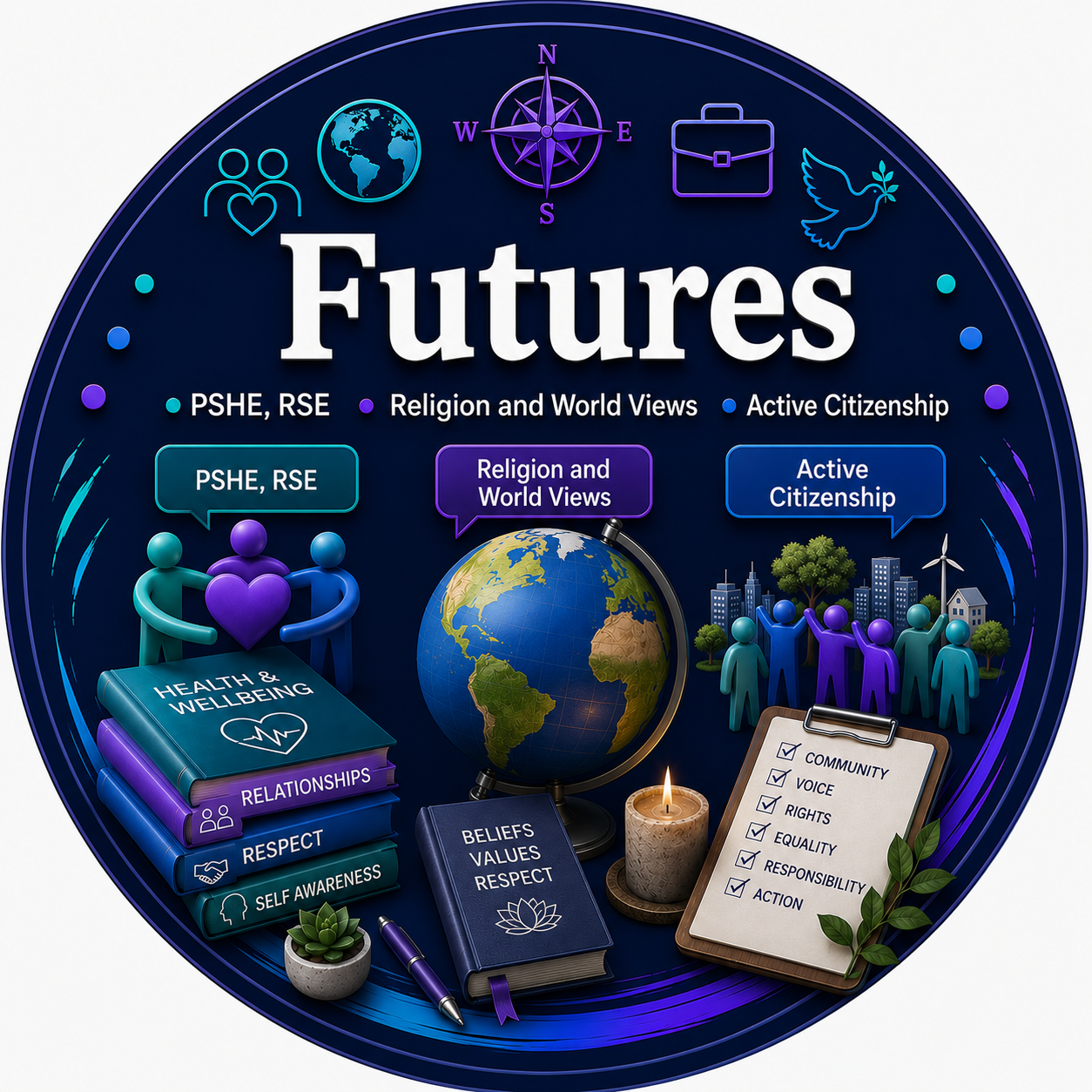
- Futures Education at Furrowfield School which includes PSHE (Personal , Social, Health adn Economic Education) and RSHE (Relationships, Sex and Health Edcation)
- Careers Education
Students follow personalised pathways which allow them to achieve a range of nationally recognised qualifications appropriate to their strengths, interests and future aspirations. These include:
Academic Qualifications
- GCSE qualifications across a range of subjects
- Functional Skills English
- Functional Skills Mathematics
Vocational Qualifications
- BTEC qualifications
- Vocational learning opportunities linked to employment and future career aspirations
Personalised Accreditation
- AQA Unit Awards
- Employability awards
- Preparation for Adulthood programmes
- Personal development accreditation
- Life skills qualifications
Teaching is carefully adapted to meet individual needs whilst maintaining high expectations. Staff use evidence-informed approaches including:
- Explicit instruction
- Retrieval practice
- Adaptive teaching
- Modelling
- Questioning
- Feedback
- Scaffolding
- Reflection and self-assessment
The Habits of Mind are embedded throughout lessons and wider school experiences. Students are encouraged to think creatively, ask questions, persevere through challenges, work collaboratively and reflect on their learning.
Our Futures Education at Furrowfield School curriculum contributes significantly to personal development and preparation for adulthood. Students develop knowledge and understanding relating to:
- Mental and physical wellbeing
- Healthy relationships
- Equality and diversity
- British Values
- Citizenship
- Online safety
- Financial education
- Employability
- Personal safety
- Protected characteristics
- Independent living
Careers education is fully integrated throughout the curriculum and aligned with the Gatsby Benchmarks. Students benefit from:
- Independent careers guidance
- Employer encounters
- College and training provider visits
- Work-related learning experiences
- Careers events
- Preparation for further education, employment and apprenticeships
In addition to academic learning, students access a wide range of enrichment opportunities, therapeutic interventions, clubs and societies, Forest School experiences, sports provision and wellbeing activities which further strengthen social development, confidence and resilience.
Curriculum Impact
The impact of our curriculum is demonstrated through the academic achievements, personal development and future success of our students.
Students leave Furrowfield School with:
Strong Academic Outcomes
- GCSE qualifications
- BTEC qualifications
- Functional Skills qualifications
- AQA Unit Awards
- Improved literacy, numeracy and communication skills
- Secure knowledge across a broad and balanced curriculum
Personal Development
Students develop:
- Confidence and self-esteem
- Emotional resilience
- Positive relationships
- Effective communication skills
- Independence and self-regulation
- Leadership skills
- Respect for others
- A strong sense of belonging
The Furrowfield Way enables students to become imaginative, inquisitive, resilient, reflective and collaborative learners who are equipped to overcome barriers and embrace future opportunities.
Social Development
Students are prepared to become active and responsible members of society through:
- Development of social and emotional skills
- Understanding of diversity and inclusion
- Respect for different views and beliefs
- Positive contributions to their community
- Increased awareness of equality, rights and responsibilities
Careers and Future Destinations
Students leave Furrowfield School with:
- Clear aspirations for the future
- Knowledge of career pathways
- Employability skills valued by employers
- Preparation for adulthood
- Readiness for further education, employment and training
Improving Life Chances
Our ultimate measure of success is the extent to which students are prepared for successful and fulfilling adult lives.
Through our curriculum, students gain the qualifications, knowledge, skills, confidence and personal qualities necessary to thrive beyond Furrowfield School. They leave equipped to contribute positively to society, pursue meaningful careers and continue learning throughout their lives.
Through the Furrowfield Way and our ethos of Together We Succeed, we ensure that every student is empowered to achieve their potential and secure the very best possible life chances.